
Frequently Asked Questions
Everything you need to know.
Still have questions?
We're here to help.

Our Promise
We believe in clear communication, honest timelines, and a commitment to exceeding your expectations.
Welcome / Why JAH
-
You should expect a personal, collaborative custom furniture experience centered on your space, your story, and the way the piece will be used. JAH Fine Woodworking designs and builds handcrafted hardwood and epoxy tables with careful attention to size, material, proportion, finish, and long-term ownership.
From the first conversation through delivery, the goal is clarity, care, and craftsmanship. We guide the decisions, explain the options, and help shape a table that feels intentional rather than generict goes here
-
It means a JAH table is built for more than appearance. It is made for meals, conversations, holidays, prayer, laughter, quiet mornings, difficult conversations, and the ordinary moments that become part of a family’s story.
Built for Generations reflects our commitment to lasting quality. The table is intended to be used, cared for, and passed forward rather than treated as disposable furniture or a short-term design trend.
-
Our philosophy is simple: furniture should be personal, useful, beautiful, and lasting. Wood, epoxy, proportion, joinery, and finish all matter, but they serve a deeper purpose: creating a meaningful place for people to gather.
We do not treat custom furniture as mass production with different options. We treat it as a relationship-driven process shaped by the client, the material, and the space where the piece will live.
-
A furniture store sells finished products from existing designs. JAH creates a piece specifically for you, beginning with conversation, purpose, material selection, design direction, and the room where the table will live.
Store-bought furniture can be practical, but it is usually designed for broad appeal. A custom JAH table is built around your dimensions, your wood, your colors, your story, and the way your family, guests, or clients will gather around it.
About JAH / Faith
-
JAH Fine Woodworking is a Columbus, Ohio-based custom woodworking studio focused on handcrafted hardwood and epoxy tables, including dining tables, coffee tables, end tables, conference tables, and statement pieces.
We specialize in collaborative design, carefully selected materials, artistic epoxy work, and heirloom-quality construction. Our work is rooted in craftsmanship, relationships, stewardship, and the belief that furniture should serve people well for generations.
-
JAH is a shortened form of Yahweh, one of the names of God found in Scripture. The name reflects the faith foundation behind our work and the values we want the business to carry.
Not every client shares our faith, and that is completely understood. Every client receives the same commitment to quality, integrity, honesty, service, and care. Faith is not used as a sales tool; it is part of why we care deeply about the work and the people we serve
-
Faith influences our work because it influences how we treat people, how we communicate, how we handle challenges, and how we define success. For us, faith is not a marketing strategy; it is a foundation for integrity, stewardship, service, gratitude, and excellence.
That means we want every project to be handled with honesty and care. Whether or not a client shares our faith, our commitment is the same: to serve well, build well, and honor the trust placed in us.
-
Stewardship means treating materials, time, relationships, and opportunities as things entrusted to us rather than things to be used casually. A tree may spend decades growing before it reaches our shop, and we believe that material deserves respect.
In practice, stewardship affects how we select wood, reduce waste, communicate with clients, manage expectations, and build pieces meant to last. For more detail, see the Stewardship Guide.
-
The JAH Promise is our commitment to approach each project with craftsmanship, honesty, communication, care, and respect for the client’s investment. We want the process to feel as trustworthy as the finished table feels beautiful.
That promise does not mean every project is simple or without challenges. It means we will communicate clearly, make thoughtful decisions, stand behind our work, and treat the relationship as more important than a single transaction.
Custom Furniture
-
Choose custom furniture when you want a piece designed for your space, your needs, and your story rather than something selected from existing inventory. Custom work allows the size, material, shape, color, base, and finish to be developed around the way the piece will actually be used.
For many clients, the value is not only uniqueness. It is fit, meaning, quality, and the confidence that the table was created intentionally for their home, family, business, or gathering space.
-
Custom does not have to mean unusual, dramatic, or eccentric. Sometimes the best custom table is quiet, simple, refined, and perfectly suited to the room.
To us, custom means personal. The piece is designed around your dimensions, preferences, materials, and purpose. It may be bold and artistic, or it may be understated and timeless. The goal is not novelty; the goal is rightness
-
Custom furniture costs more because it is not produced in bulk. Each project requires individual design time, material selection, layout, fabrication, finishing, communication, and delivery planning. The price reflects the labor, skill, materials, and care required to build one piece well.
It is an investment in a piece that should serve for years, often decades. The goal is not simply to purchase a table, but to commission something durable, meaningful, and worthy of the space it occupies.
-
Gathering matters because the table is often where everyday life becomes meaningful. Meals, conversations, holidays, birthdays, prayer, laughter, grief, and celebration often happen around a table.
We build furniture with that purpose in mind. The table is not the center of the story; the people around it are.
-
It means the experience matters too. The finished table is important, but so are the conversations, design decisions, material discoveries, progress updates, and trust built throughout the process.
A well-made custom piece should feel personal before it ever enters the room. By the time it is delivered, the client should understand the story behind the material, the choices behind the design, and the care behind the craftsmanship.
Pricing & Investment
-
Every JAH table is custom designed, so pricing depends on size, wood species, slab availability, epoxy design, base selection, finish, complexity, and delivery requirements. Most meaningful custom table projects require a significant investment, and larger or more complex pieces naturally cost more.
We discuss budget early so expectations are clear. Once the design direction, materials, and scope are defined, we provide a detailed quotation before work begins. The goal is transparency, not surprises.
-
Pricing is influenced by the size of the piece, the species and quality of wood, slab character, epoxy volume and complexity, base design, finish type, fabrication difficulty, schedule, and delivery or installation needs.
Two tables with similar dimensions can vary substantially if one uses rare figured material, complex epoxy work, custom metalwork, or challenging installation requirements. We explain the major cost drivers during the design and quoting process so you understand what is shaping the investment
-
A deposit secures your place in the production schedule and allows us to begin committing time, materials, and design resources to your project. Custom work often requires purchasing slabs, ordering components, preparing drawings, and reserving shop time before construction begins.
The deposit also confirms that the project is moving from discussion into commission. It allows both sides to proceed with clarity and commitment.
-
Final payment is typically due when the piece is complete and before delivery, pickup, or final installation. This ensures the project is fully settled before the table leaves the shop or is released to the client.
Any project-specific payment terms are reviewed during the quoting and approval process so there are no surprises at the end.
-
Yes. A clear budget is helpful because it allows us to guide design decisions responsibly. Size, wood species, epoxy complexity, base selection, and finish can all be adjusted to better align the project with your priorities.
We will not pressure you into a design that is uncomfortable financially. Instead, we help you understand what is possible within your range and where changes will have the greatest impact.
Design & Commissioning
-
A project begins with a conversation. We talk about the type of piece you want, where it will live, how it will be used, who will gather around it, and what kind of feeling or story you want the table to carry.
From there, we begin shaping the design direction: size, wood species, slab style, epoxy color, edge profile, base, finish, budget, and timeline. You do not need to have every answer before reaching out.
-
Conversation helps us understand the purpose behind the piece. A table for daily family dinners, a formal dining room, a corporate boardroom, or a quiet living room centerpiece may all require different design decisions.
The better we understand the people, the space, and the intended use, the better we can design a table that feels natural, functional, and personal instead of simply attractive.
-
No. Some clients arrive with a very clear vision, while others only know they want something beautiful, meaningful, and well made. Both starting points are welcome.
Part of our role is helping you discover possibilities. We can guide you through size, wood species, epoxy Colors, edge details, base options, and finish choices until the direction becomes clear.
-
Yes, as much or as little as you prefer. Some clients enjoy being involved in every decision, while others provide broad direction and trust our recommendations. Most projects fall somewhere in between.
Our responsibility is to keep the process clear and collaborative. You will have opportunities to review direction, ask questions, and confirm key decisions before the table moves into production.
-
Yes. When helpful, we provide drawings, digital renderings, or other visual references to help you understand size, proportions, base style, epoxy layout, and overall design direction before fabrication begins.
These tools are not meant to replace craftsmanship; they help align expectations. They give us a shared reference point so decisions can be refined before materials are cut or epoxy is poured.
-
Yes. Many clients enjoy participating in slab selection, and we welcome that involvement. The slab is often the heart of the project because its grain, shape, color, and natural character strongly influence the finished piece.
We will help you evaluate options based on beauty, stability, scale, proportion, and suitability for the design. The goal is to select material that serves both the story and the structure of the table.
-
The number of revisions depends on the scope of the project and is addressed during the design and quoting process. In general, we expect reasonable refinement as part of collaboration.
The objective is not to rush decisions, but to develop a clear direction before construction begins. Significant redesign after approval may affect cost or schedule, and we will communicate that clearly if it occurs
-
The design process varies based on the complexity of the project and how quickly decisions are made. Simple projects may move quickly, while highly customized tables with unique slabs, epoxy colors, or bases may require more time.
We would rather take the time needed to make good decisions than force a design forward prematurely. A clear design process helps prevent confusion and protects the quality of the final piece.
-
Our design process is relationship-driven rather than transaction-driven. We are not simply asking you to pick from a menu of options; we are trying to understand what the piece should become and why it matters.
That approach allows the final table to feel connected to the client, the room, the material, and the story behind the commission
-
Collaboration matters because the best custom pieces are shaped by both craftsmanship and personal understanding. You bring the vision, setting, needs, and story. We bring material knowledge, design guidance, and building experience.
When those come together, the result is stronger than either side could create alone. The goal is a table that feels like it truly belongs to you
Wood & Material Selection
-
Material selection matters because wood gives a table much of its personality. Color, grain, figure, edge shape, natural character, and scale all influence how the finished piece feels before any epoxy, base, or finish is added.
Choosing the right material is both an aesthetic and structural decision. We look for beauty, stability, proportion, and compatibility with the intended design. -
Black walnut is one of our most requested species because it offers richness, warmth, depth, and timeless character. Its deep brown tones and dramatic grain work beautifully in traditional, rustic, transitional, and contemporary spaces.
Walnut also pairs exceptionally well with epoxy, steel, and refined base designs. For many clients, it has the presence and longevity they want in a future heirloom -
Maple offers a brighter, lighter, and often more energetic personality than walnut. It can showcase beautiful figure, contrast, and movement, especially when paired with vibrant epoxy Colors.
Maple is a strong choice when a client wants the table to feel fresh, inviting, contemporary, or visually dynamic while still remaining rooted in natural hardwood. -
Yes. White oak is an excellent choice for many custom tables. It is durable, stable, and visually versatile, with a clean grain structure and warm tone that works well in modern, traditional, and transitional spaces.
White oak often feels current without feeling trendy. It is a strong option for clients who want understated elegance and long-term appeal. -
Yes. Cherry is known for warmth, refinement, and graceful aging. One of its most distinctive qualities is the way its color deepens and develops over time.
Cherry can be a beautiful choice for clients who want a table with quiet elegance, natural warmth, and a more traditional or classic character.
-
Yes. Ash can be a strong and beautiful furniture wood, often recognized for its lighter color, pronounced grain, and durable performance. It can bring a clean, natural, and slightly more casual character to a custom piece.
Like any species, ash must be selected carefully. We evaluate the individual material for stability, figure, scale, and suitability before recommending it for a project. -
Yes, when the right material is available and appropriate for the design. Locust and honey locust can offer striking color, hardness, and unique grain character that make them memorable choices for custom work.
Because availability and slab quality can vary, we evaluate these species project by project. When the right piece is found, it can create a distinctive and highly personal table.
-
We select slabs based on beauty, stability, size, proportion, moisture condition, grain direction, natural character, and suitability for the intended design. A slab must be more than visually interesting; it also has to be structurally appropriate.
We look for material that supports the story of the piece while also giving us confidence in the long-term performance of the finished table.
-
Figure refers to visual movement or pattern in the wood, such as curl, quilting, spalting, flame, or unusual grain activity. Character refers more broadly to the natural features that give a board personality, including color variation, knots, checks, voids, and live edges.
These qualities help make each table distinct. We use them intentionally, highlighting what is beautiful while stabilizing or refining areas that need care
-
Yes, when they are structurally appropriate and thoughtfully handled. Knots, cracks, voids, and live-edge irregularities can add tremendous beauty and authenticity to a piece.
We do not automatically remove every natural feature. Instead, we decide whether to preserve, stabilize, fill, accent, or refine it so the final table is both beautiful and dependable
-
Materials matter because they become part of the table’s story and long-term performance. A beautiful design cannot overcome poor material selection, and a future heirloom begins with wood worthy of the work.
We choose materials with both the present and future in mind: how the table will look today, how it will age, and how it can serve the people who gather around it for years to come.
Epoxy & Color Design
-
Epoxy can preserve, stabilize, and celebrate the natural character of wood. Voids, cracks, and irregular edges do not always need to be hidden; with the right design, they can become meaningful features.
Epoxy can also introduce color, contrast, depth, movement, and symbolism. The best epoxy work supports the wood rather than competing with it.
-
Yes, river tables are still popular, but the best designs have become more refined. Many clients now want epoxy that feels balanced, timeless, and integrated with the wood rather than loud or distracting.
A river table can still be dramatic, but the goal is composition. The wood and epoxy should feel like they belong together as one finished piece
-
Yes. Most epoxy projects involve custom color development. Color can be inspired by your home, cabinetry, flooring, artwork, brand identity, personal story, faith, nature, or a specific emotional tone.
We work through samples, references, and design direction so the color feels intentional. The goal is not just to choose a pretty color, but to choose the right color for the piece.
-
Epoxy color selection begins with the environment where the table will live and the feeling the piece should create. We may consider flooring, cabinetry, wall color, lighting, furnishings, artwork, and the wood itself.
Color can be subtle, bold, transparent, metallic, earthy, or symbolic. We guide the process so the final choice supports the design instead of overwhelming it.
-
Yes. We can design a table to complement your existing décor, including flooring, cabinetry, wall colors, furniture, lighting, and architectural finishes. Photos, samples, and design inspiration are all helpful.
The goal is not always a perfect match. Often the best result is a piece that belongs in the room while still offering enough contrast and presence to feel special
-
Metallic pigments are fine powders added to epoxy to create shimmer, movement, depth, and visual energy. Depending on the color and technique, they can produce effects that feel like water, stone, smoke, fire, pearl, copper, bronze, or deep mineral tones.
They should be used thoughtfully. The best metallic epoxy enhances the design without making the table feel overly busy or trendy.
-
Yes. Clear epoxy can be an excellent choice when the goal is to preserve the natural character of the wood without introducing strong color. It can fill voids, stabilize cracks, and maintain a clean, refined appearance.
Clear epoxy may also reveal depth within the slab, especially around live edges, knots, and natural openings. It is subtle, but it can be very beautiful when used well
-
No. Natural cracks and voids do not always need to be removed. In many cases, they are part of what makes the slab beautiful and worth preserving.
We evaluate each feature for structural stability and design value. Some areas may be filled with epoxy, reinforced, shaped, or highlighted so the natural history of the tree remains visible in the finished table
-
Yes. Color can carry meaning, emotion, memory, or symbolism. A color may connect to water, fire, family history, a favourite place, a scripture theme, a business identity, or the overall atmosphere of a room.
When used intentionally, epoxy color becomes more than decoration. It becomes part of the story the table quietly tells
-
A great epoxy design feels intentional, balanced, and connected to the wood. The epoxy should not look like an afterthought or overpower the natural beauty of the slab.
The strongest designs consider proportion, color, movement, depth, edge shape, and long-term appeal. Whether subtle or dramatic, the epoxy should serve the whole composition.
Craftsmanship & Construction
-
Handcrafted means skilled human judgment is involved throughout the process. Material layout, shaping, joinery, sanding, finishing, edge treatment, and final assembly all require decisions that cannot be reduced to a simple production formula.
No two slabs behave exactly alike, and no two projects move through the shop in exactly the same way. Handcrafted work allows the piece to be built with attention to its specific material and purpose
-
Craftsmanship matters because it affects how a table looks, feels, performs, and ages. Many details may not be obvious at first glance, but together they create stability, comfort, confidence, and long-term beauty.
Good craftsmanship is often felt more than seen. It shows up in smooth edges, solid construction, clean transitions, thoughtful proportions, and a finish that invites daily use
-
Details matter because furniture is the result of hundreds of decisions. Grain layout, edge profiles, transitions, base alignment, finish consistency, joinery, and proportion all contribute to the final experience.
A single detail may seem small, but together they define quality. The difference between ordinary furniture and meaningful craftsmanship is often found in decisions most people never consciously notice.
-
Stability begins with proper material selection, moisture awareness, sound design, appropriate joinery, and construction methods that respect wood movement. A table must do more than look beautiful; it must perform over time.
We design and build with the natural behavior of solid wood in mind. That experience helps protect the table’s structure, alignment, and long-term reliability.
-
Wood movement is natural. Solid wood expands and contracts as humidity and environmental conditions change, and good furniture design must allow for that movement.
Rather than fighting the material, we build in ways that respect it. Proper construction, stable design, and reasonable indoor conditions all help the table perform well over time.
-
Table thickness varies by design, slab availability, proportions, and the desired visual weight of the piece. Many custom hardwood and epoxy tables are built with substantial thickness, but thicker is not automatically better in every situation.
The right thickness should serve the design, scale, base, room, and intended use. We discuss this during design so the table feels balanced rather than oversized or underbuilt
-
Yes. Longevity is one of the central goals of our work. We build with durable materials, thoughtful construction, careful finishing, and respect for the way the table will actually be used.
No piece of furniture is indestructible, but a well-built table should not feel temporary. With reasonable care, it should serve beautifully for many years and remain worthy of future refinishing or repair if needed
-
A piece becomes an heirloom when it carries quality, usefulness, beauty, and meaning over time. It is not only something that lasts physically; it becomes connected to the people, meals, conversations, memories, and seasons of life around it.
We cannot force heirloom value, but we can build in a way that gives the table the opportunity to become one.
-
Our standard of quality is to build in a way that respects the client, the material, the craft, and the investment being made. That means careful planning, honest communication, sound construction, and attention to details that affect long-term performance.
Quality is not only a visual standard. It is a discipline carried through decisions that may never be obvious but matter over the life of the piece.
-
We believe craftsmanship still matters because people are tired of disposable things. A handcrafted table offers a different kind of value: permanence, intention, story, and the evidence of human care.
In a world where many products are designed to be replaced, we believe there is still deep value in building something meant to remain.
Delivery, Installation & Ownership
-
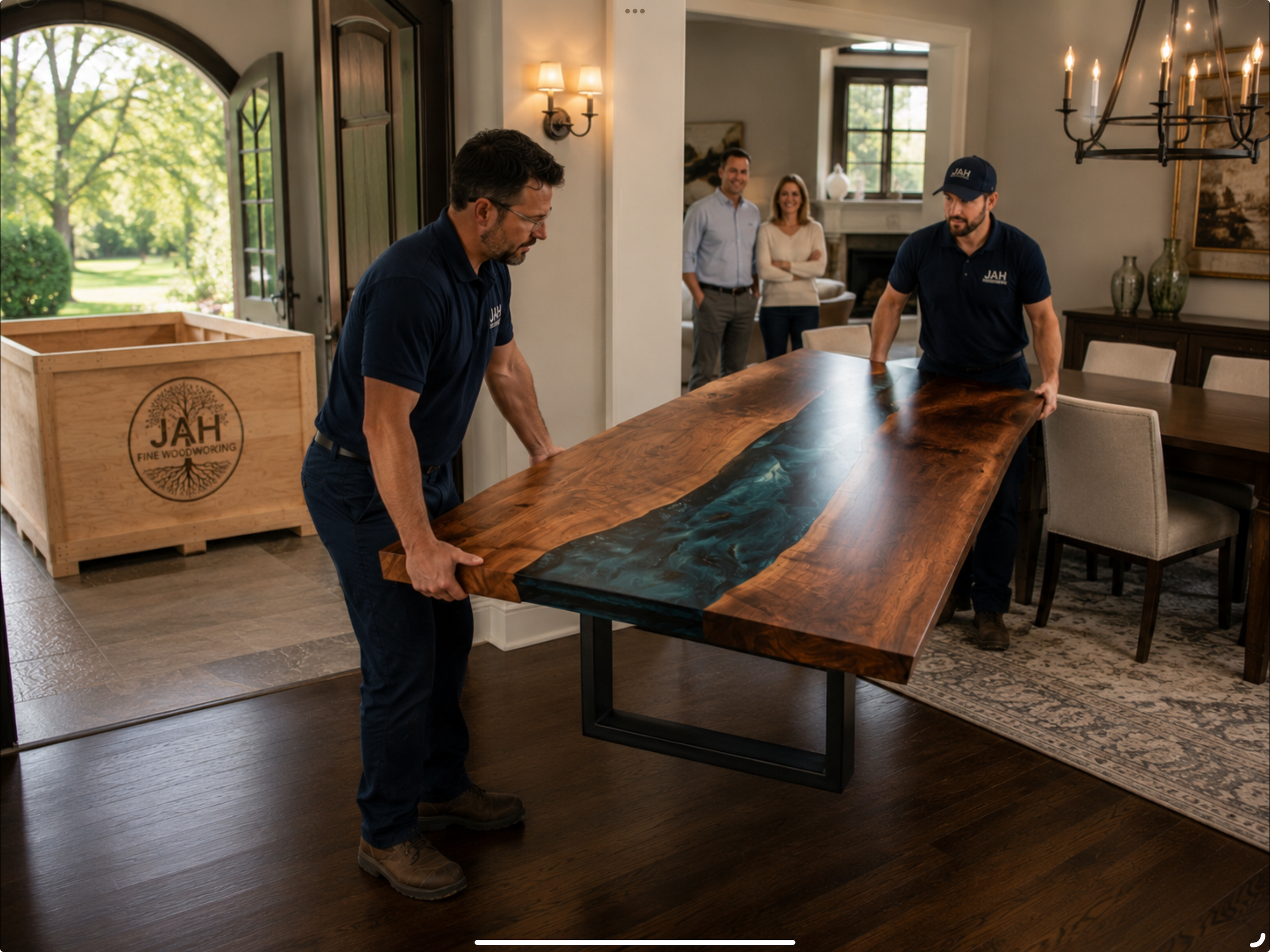
Delivery and installation matter because the project is not complete until the table is safely placed in the space it was designed for. A table may spend months in design and construction, but delivery day is when it becomes part of your home or business.
Careful planning protects the piece, the property, and the experience. We want the final step to feel calm, professional, and worthy of the work that came before it.
-
Whenever practical, yes. We personally deliver many projects within approximately 100 miles of Columbus, Ohio. Personal delivery allows us to confirm placement, inspect the final setting, and make sure the installation is handled properly.
For projects beyond that range, we coordinate appropriate delivery methods with the same goal: safe arrival and proper placement.
-
Yes. We can coordinate nationwide delivery through trusted professional partners when personal delivery is not practical. Distance should not prevent a client from commissioning a meaningful custom piece.
Delivery logistics are reviewed in advance, including protection, crating when needed, access conditions, timing, and installation requirements.
-
Before delivery, we review the practical details that affect a smooth installation: doorway sizes, stairs, hallways, elevators, site access, final room placement, base attachment, and any special handling needs.
The purpose is simple: no surprises. Good planning helps protect the table, the property, and the client’s experience
-
We address access concerns before the table is built whenever possible. Doorways, stairs, hallways, elevators, and room layout can affect size, base design, and whether the piece should be assembled on site.
If a space is challenging, we will discuss options during design. The goal is to create a beautiful table that can actually be delivered and installed safely.
-
Yes, when the design requires it. Many tables are delivered with the top and base separated, then assembled or adjusted on site for safety and practicality.
On-site assembly can make delivery easier, protect the piece during transport, and allow final placement to be handled carefully in the room where the table will live.
-
The project does not simply end when the table is delivered. After delivery, we remain available for care questions, maintenance guidance, and reasonable follow-up related to the piece.
A custom table is meant to live with you for a long time. Ownership should feel confident, personal, and supported—not like the relationship disappeared the moment the table arrived.
Care, Maintenance & Longevity
-
Yes. Fine furniture is meant to be used, not feared. A JAH table is built for gathering, which means meals, conversations, celebrations, homework, coffee, holidays, and normal life.
Reasonable care still matters. Daily use and long-term beauty can live together when the table is cleaned properly, protected from unnecessary abuse, and maintained with common sense
-
In most cases, clean your table with a soft cloth and a mild cleaning solution. Avoid aggressive chemicals, abrasive pads, harsh solvents, or anything that could damage the finish.
If you are unsure about a cleaner, ask before using it. Simple, consistent care is usually the best way to preserve the surface over time.
-
Yes, we recommend coasters. Not because the table is delicate, but because prevention is easier than repair. Coasters, placemats, and trivets are small habits that protect the finish over time.
A well-built table can handle normal use, but standing moisture, heat, and repeated abrasion should still be avoided whenever possible.
-
We recommend using trivets or heat-resistant barriers rather than placing hot dishes directly on the table. Sudden or concentrated heat can affect many furniture finishes, even durable ones.
Using a trivet is simple protection. It helps preserve the finish and prevents unnecessary damage from heat, steam, or moisture trapped beneath a hot dish
-
Wood is a natural material, so standing water and excessive moisture should be avoided. Spills should be wiped up promptly with a soft cloth.
Normal daily use is not a problem when reasonable care is practiced. The key is avoiding prolonged exposure to water, damp items, or harsh cleaning products.
-
Any furniture surface can scratch if it is used hard enough. A durable finish helps, but no finish makes a table immune to sharp objects, grit, dragging items, or careless use.
The goal is graceful aging, not untouched perfection. Over time, small signs of life can become part of the table’s story, and many surfaces can be refreshed if needed
-
Yes. Natural wood changes with light exposure over time. Sunlight can darken, warm, lighten, or shift the tone of certain species, and uneven exposure may create visible differences.
This is normal, not a defect. Window treatments, rotating objects on the surface, and avoiding prolonged intense direct sun can help the table age more evenly.
-
Finish life depends on use, care, environment, cleaning habits, and the type of finish selected. A table used daily by a busy family will naturally experience more wear than a formal table used only occasionally.
With reasonable care, the finish should serve well for years. When wear eventually appears, many tables can be refreshed or refinished.
-
In many cases, yes. One advantage of a well-built solid wood table is that it can often be refreshed, repaired, or refinished rather than replaced. The best approach depends on the finish, wood, epoxy, and condition of the piece.
We are happy to discuss refinishing or repair options when the time comes. For detailed care practices, see the Stewardship Guide or Care Guide.
-
We stand behind our craftsmanship and want clients to feel confident in their investment. Warranty details depend on the project, materials, finish, intended use, and ownership conditions, and they are addressed as part of the commissioning process.
Normal wear, misuse, environmental extremes, standing moisture, heat damage, and improper care are different from craftsmanship issues. If a concern arises, contact us so we can evaluate it fairly.
-
No table used for real life should be expected to look brand new forever, and that is not the goal. Fine furniture should age gracefully, developing evidence of meals, conversations, celebrations, and everyday use.
The goal is not untouched perfection. The goal is lasting beauty, sound construction, and a surface that can be cared for, refreshed, and enjoyed over time.
Stories, Legacy & Gathering
-
Relationships matter because custom furniture is personal. The better we understand the client, the room, the intended use, and the meaning behind the project, the better we can design and build the piece.
We want clients to feel heard, respected, and cared for throughout the process. Trust is part of the work
-
Some tables receive names because a design, material, color palette, scripture, or client story begins to carry a clear theme. The name is never forced; it emerges naturally when the project seems to call for it.
A name can help honor what makes the piece unique. It turns the table from an object into something more personal and memorable.
-
Some tables have stories because the material, design, client journey, or inspiration behind the piece deserves to be remembered. A story can explain why a color was chosen, why a slab mattered, or what the piece is meant to represent.
The story does not replace craftsmanship. It adds meaning to craftsmanship and helps the table carry significance beyond its appearance.
-
Some pieces include Scripture when it naturally fits the meaning of the project or the client’s desire. Scripture may inspire a name, a color palette, an engraving, or the story attached to the table.
This is never forced. It is simply one way faith, meaning, and craftsmanship can come together when appropriate
-
Yes, but legacy is built over time. A new table begins as a commissioned piece, but it becomes part of a family legacy through the meals, conversations, holidays, prayers, decisions, and memories that happen around it.
We build with that possibility in mind. The table is made to be present for the moments that will give it meaning.
-
The real product is not only a table. It is a meaningful gathering place, a personal design experience, and a piece of craftsmanship that can become part of a family or business story.
Wood, epoxy, steel, and finish are the physical materials. Trust, care, memory, and relationship are part of what make the finished piece matter.
Faith, Stewardship & Promise
-
Quality matters because it is a form of respect: respect for the client, the material, the craft, and the investment being made. Shortcuts may not be obvious at first, but their consequences often appear later.
We care about quality because we are building pieces meant to be used, trusted, and valued for a long time.
-
Integrity means saying what we will do and doing what we say. It means being honest about cost, schedule, materials, design decisions, challenges, and expectations.
In a custom project, trust is essential. If something needs to be discussed, clarified, or corrected, we want to handle it directly and respectfully.
-
Service means remembering that the client is not an interruption to the craft; the client is part of the reason the work exists. We want the process to feel respectful, clear, and personal.
Good service does not mean saying yes to everything. It means listening carefully, guiding honestly, communicating well, and caring about the client’s experience.
-
Success is not only a completed table or a satisfied transaction. Success is a client who feels heard, a piece that fits its purpose, a process handled with integrity, and a table that serves people well for years.
A successful project should feel beautiful on delivery day and still feel meaningful long after the first impression has passed.
-
Furniture still matters because homes and gathering places still matter. A table is one of the few objects that can quietly hold daily routines, family traditions, business decisions, hospitality, and memory.
In a disposable culture, lasting furniture reminds us that some things are worth building carefully and keeping.
-
Our commitment to craftsmanship is to build thoughtfully, patiently, and honestly. We want each piece to reflect sound construction, careful material use, refined details, and a finish suited to real ownership.
Craftsmanship is not simply how the table looks in photographs. It is how it feels, performs, and ages over time.
-
We hope to leave a legacy of faithful work, meaningful relationships, and furniture that serves people well. The goal is not simply to build impressive pieces, but to build with care, integrity, and purpose.
If our tables become places where families gather, stories are told, and memories are made, that is a legacy worth pursuing.
-
We hope clients remember that they were treated with care and that their table was built with intention. The finished piece should feel personal, beautiful, useful, and worthy of the trust they placed in us.
More than anything, we hope they remember that the process was honest, the craftsmanship was serious, and the relationship mattered.